
The Divine Commodity: Discovering A Faith Beyond Consumer Christianity gives language to the sinking feeling many ministry folks have as we realize how enmeshed our churches have become with 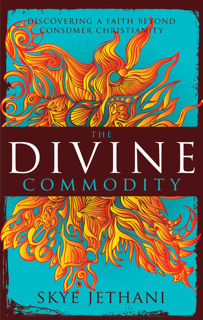 consumer culture. Skye Jethani, a friend and managing editor of Leadership Journal, provides the right balance of cultural analysis, clear insight, and gentle direction to show how the American church has often neglected our identity as the people of God for something more culturally relevant. To be clear, this is not a “how-to” manual; neither is it another book about all that is wrong with our churches. Like others of us, Skye has been tempted to walk away from the many frustrations of the local church but found himself unable to do so. His love for and commitment to the local church (Skye is also a pastor) is what allows us to receive the book’s difficult truths.
The Divine Commodity is organized into nine chapters, each which observe an aspect of consumerism that has infiltrated the church. Filled with stories, cultural artifacts, and Biblical reflection these observations are easily connected to the reader’s own context. Particularly compelling are Skye’s reflections on the life and paintings of Vincent van Gogh as a foil to consumer Christianity. In the Dutch artist’s life we encounter one whose commitment to Christ (he trained to be a pastor) led him to bitterly critique his experience with Christianity and the church. The addition of eleven of van Gogh’s paintings helps us imagine a faith that is completely devoted to the narrow way of Jesus, one that consistently rejects the allure of self-centered faith.
It is the description of an alternative to consumer Christianity that is most commendable. In a chapter about the tendency to place institutions before relationships Skye writes,
What may be needed is a fundamental rethinking of the church within the minds of the members, cultivating the imagination to conceive of the church as a relational community rather than an institutional organization. Beginning on the smallest end of the scale, this means relearning the lost art of friendship.
Analysis combined with imagination is why I’d recommend this book to just about anyone. My only gripe is that the book could be expanded (the 175 pages were easily read over a weekend). I am convinced that until we acknowledge the power our consumer culture holds over the church (and over me!), we will find our thirst unquenched by a faith diluted with consumer ideals. The Divine Commodity points out the primary issue for the church in our day, one that impacts our very identity and mission. Thankfully the book also prompts us to imagine a more satisfying and transforming alternative.


 David W. Swanson
Leave a comment