
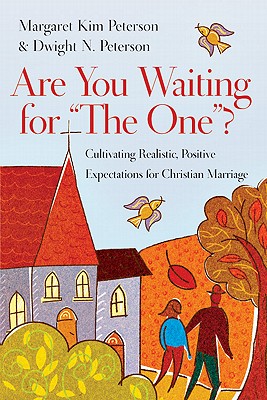
 Last summer I officiated six different weddings for six very different couples and, if I’d known of it at the time, Are You Waiting for “The One”? is a book I would have recommended to each of them. Unlike so many Christian books about marriage, Margaret and Dwight Peterson have written an immensely down to earth book, providing a seasoned alternative to so much starry-eyed fluff.
This isn’t to say that the authors are cynical about love or romance, only that they’re interested in them within the unglamorous conditions of real life over the span of many years. From this vantage point they address the question in the book’s title with refreshing honesty.
Giving up the quest for the perfect mate can mean an embrace of the truly best: the truth that while you are not perfect, you might be the right person for someone else, and that someone else, while not perfect, might be the right person for you.
One of the current challenges for our churches is how we talk about marriage. We have a sense that Christian marriage ought to be distinctive from cultural assumptions but get wobbly on the specifics. For example, we boil down our theology of sexuality to: before marriage, don’t; after marriage, do. Here the authors are very helpful as they view each of their topics through a practical theological lens.
This approach is apparent throughout, but I especially noticed it each time the authors turned to the subject of children and procreation. Contraception, the historic teaching of the church, changing cultural assumptions, and a Biblical view of hospitality are all considered when discussing children. While making clear the prominent place the church has traditionally given in marriage to procreation and child rearing, the Peterson’s also show the extent to which many Christian families are simply beginning from the same cultural starting point as their non-Christian neighbors. For those beginning at this place, Are You Waiting for “The One”? offers a wealth of gracious provocations and invitations to consider the surprises and possibilities of Christian marriage.
I have two minor complaints with easily commendable book. First, the authors rarely reference their own marriage. It would have been helpful to hear how their perspectives and theological applications have played out in their lives over their years together. Second, as college professors most of their examples come from their undergraduate students. While these provide plenty of fodder and foil, I can’t imagine the stories would resonate with those outside of that unique stage of life.
But these are quibbles and shouldn’t hinder a wide audience from appreciating the book. I’m not sure how many weddings I’ll participate in this year, but it’s likely I’ll recommend that each couple dip into these pages in the months before and after the wedding.
_____________________________
I received a review copy of this book from the publisher.


 David W. Swanson
Leave a comment