
glacier or volcanic spring-fed water?

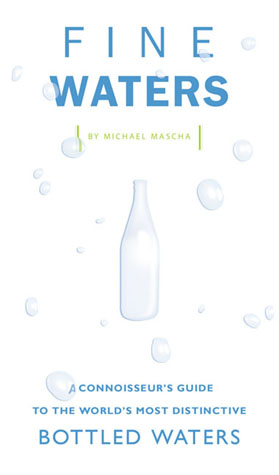
Fine Waters- A Connoisseur's Guide to the World's Most Distinctive Bottled WatersThanks to those who suggested books for this summer’s fiction reading.  This morning I learned about a book that hasn’t been suggested, though I suppose it doesn’t fit the fiction criteria. Fine Waters: A Connoisseur’s Guide to the World’s Most Distinctive Bottled Water is a guide to the world’s most interesting, and exclusive, bottled waters.  The book, according to the publisher, “introduces readers to the epicurean delights of water, sharing the ins and outs of the characteristics that provide various waters with their unique flavors.”

Blogger Jason Kottke pointed out Fine Waters along with a post at BLDG BLOG about the growing interest in fine waters.  Some examples of these waters include,

Danish Iskilde‘s “flinty, crisp style” apparently derives from the Jutland aquifer’s complicated geology, consisting of interlaced deposits of quartz sand, clay, gravel, and soil. The most expensive (and possibly the most exciting) water on the menu is 420 Volcanic from New Zealand. Sourced from the Tai Tapu spring, which bubbles up through more then 650 feet of rock at the bottom of an extinct volcano, it is apparently “extremely spritzy on the palate with a tangy mineral finish.”

From what I understand, about 20% of the world’s population does not have access to clean water for drinking or bathing.  That’s about 1 billion people who- I have to imagine- would find the idea of a guide to distinctive bottled water utterly incomprehensible.  How do the rest of us, the other 80% of the world’s population, respond to increasingly expensive bottled waters?  Does it matter that some of us can afford to develop a palette that distinguishes glacier water from volcanic spring water while 1 billion people would be happy with the water from our kitchen sinks?

On the other hand, the differences between those without clean water and the fine waters folks is probably only one example of the way we can become numb to the massive disparities in our world.  Is the nice restaurant dinner I am about to enjoy any different from a bottle of MaHaLo Deep Sea water?

Can a line be drawn between appropriate enjoyment and extravagant injustice?

5 responses to “glacier or volcanic spring-fed water?”

  1. I’ve always found it a bit creepy, the whole water sales thing. I am fine with sink water. I’m GRATEFUL for sink water. Although my wife has fears of prescription drug runoff, bacteria from old pipes, high concentrations of lead, etc…. So we still buy bottled water, but always whatever is cheapest.

    I grew up with sink water, and I (think) I’m fine for the experience. Especially in light of a (generally agreed upon) future water crisis, buying water for “epicurean delights” rather than “to hydrate” seems entirely extravagant and excessive. Totally.

  2. I think I’d be stating the obvious by saying that bottled water connoisseur-ship skates the fine line between ridiculous and socially irresponsible. I’ve heard of some upscale restaurants that employ “water sommeliers”, but over the past couple of years or so there’s been a growing trend away from selling bottled water in restaurants in an effort to reduce waste. Here’s a good article from 2007 about it: http://www.nytimes.com/2007/05/30/dining/30wate.html

  3. Hey David in your facebook link over here you asked how much we would pay for bottled water. Living in a country where it’s unwise for us to drink the tap water we pay about buck and a half for aprox. 5 gallons. That said, I drink a fair amount of tap water here too when I have too and so far as I know have yet to fall ill. I am sometimes suspicious that the big jugs of water we purchase each week have been filled from somebody else’s tap anyways. In the end I figure that at least I am helping the local economy.

    The preciousness of water truly jumps out at you here in what is basically a very large oasis within a very dry desert. Without it, this city would not exist and every drop of it is extremely precious. Yet, even here, there are those who wash their cars almost everyday.

    The whole bottled water thing in the States drives me a little nuts on the one hand when it is so expensive and seems elitist. On the other hand I do like an alternative to buying soda or even juice if out and about. Perhaps there’s a difference between grabbing a bottle of Aquafina and 420 volcanic? Or maybe not. (BTW, I do think Otakudad’s wife’s fears about the prescription drug runoff may be well-founded.)

    But in the end how is developing a taste for certain bottled waters any different than having a favorite soda, juice, coffee, or micro-brew? Those are just fancy flavored waters that we’ve been consuming (sometimes at high price) for years with little regard for those who have no access to clean drinking water.

  4. As priviledged westerners we are bound to feel guilty whatever we consume – whether it is delicious processed food, nice clothes or reliable information.
    But let us be fair. Consuming a bottle of premium water would rarely be an alternative to drinking a glass from the sink- it would rather be an alternative to drinking a bottle of other beverages like wine, beer or Coca Cola. All of which leave a much larger environmental footstep than any bottle of water you can get – even if it was shipped from some remote corner of the earth.
    I am the producer of iskilde. when people drink a bottle of my water, they are not just hydrating themselves, they are giving themselves an experience muck akin to the pleasure of selecting and enjoying a good bottle of wine or other fine beverages. Only healthier!

    If we want to conserve water for the future we must look at farming, not bottled water. Producing beef, for instance, requires incredible amounts of good water. So rather than substituting your beatiful and exotic bottle of premium water with a coke, you might consider buying a smaller steak next time you visit that nice restaurant. That will make much more of a difference to the world.

  5. Volcanic Spring Water is strong electrolytes. It activates, enhance our body’s everyday functions, and protect our whole body system. It is micro biologically wholesome; having been preserved intact because of the underground origin of the water, which has been protected from all risk of pollution. Its mineral content, sodium, potassium, magnesium, calcium and bicarbonates are made by nature, These SPRINGWATER sources are inspected, tested and certified to be sanitary quality and free from surface water influence. The spring source is located within 59 hectares, 240 meters above sea level of approved, protected and monitored company-owned land. Bottled at the spring site by ROBERTO HIGHLAND SPRING.

Leave a reply to Roberto Barbasa Cancel reply