
This morning I finished the very excellent book by Matthew Soerens and Jenny Hwang, Welcoming the Stranger: Justice, Compassion, and Truth in the Immigration Debate. I’ll post a more thorough review later, but the following paragraph in the second to last chapter caught my eye and is worth sharing here.
Indeed, there does seem to be a disconnect between the pulpit and the pews on the immigration question: while many prominent evangelicals have endorsed a more generous immigration policy, and very few have vocally opposed such a policy, an April 2006 study found that 63 percent of white evangelicals see immigrants as a threat to U.S. customs and values, and 64 percent consider immigrants a burden on society– higher percentages than any other group surveyed, whether religious or secular.
The study they reference, “Attitudes Toward Immigration: In the Pulpit and the Pew”, comes from the Pew Research Center. Here are two summary tables from the study that fill in some of the details. Click the image for a larger view.
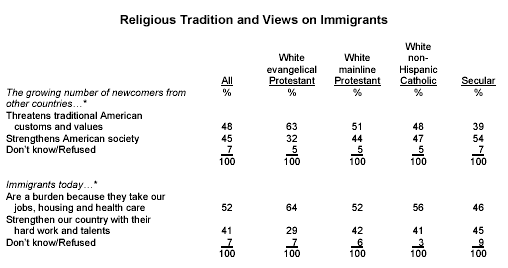
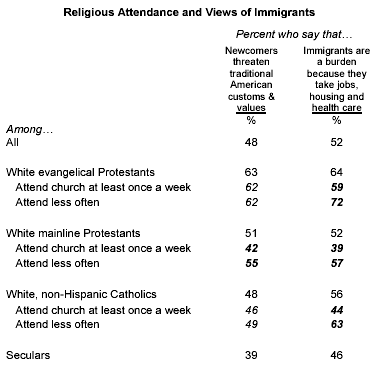 What do you make of these numbers? I’m curious how those of us who fall within the “white evangelical protestant” category might explain our pessimistic view of recent immigrants. This study reminds me of another recent Pew study regarding how religion impacts a person’s view of torture. This study found that white evangelicals more than any other group thought the use of torture could be justified.
What is it about us white evangelical folk that leads to such views? In my more cynical moments I think we have been spiritually formed less by the Bible, Christian tradition, and the Holy Spirit than by a certain political ideology.
The Pew immigration study does conclude with one sign of life. “[W]ithin each of the three largest religious groups in the U.S., the most religiously committed Americans tend to hold views that are more favorable toward immigrants.” It appears that those most closely associated with their faith tradition are more likely to form beliefs and perspectives that counter the prevailing opinion. The faith of these folks actually appears to make a difference in how they think and act. Now there’s a novel thought!


 David W. Swanson
Leave a reply to Steve Cancel reply